
The Fear: Connection Without Vulnerability
Henrich, 2020 feel stayThe Opportunity: A Wider Net
Paraphrase what was said. Ask a relevant questionThe Loss: What Can’t Be Replaced
negative capability heal Iain McGilchristThe Ethical Grey Zones
throughA Tool, Not a Therapist
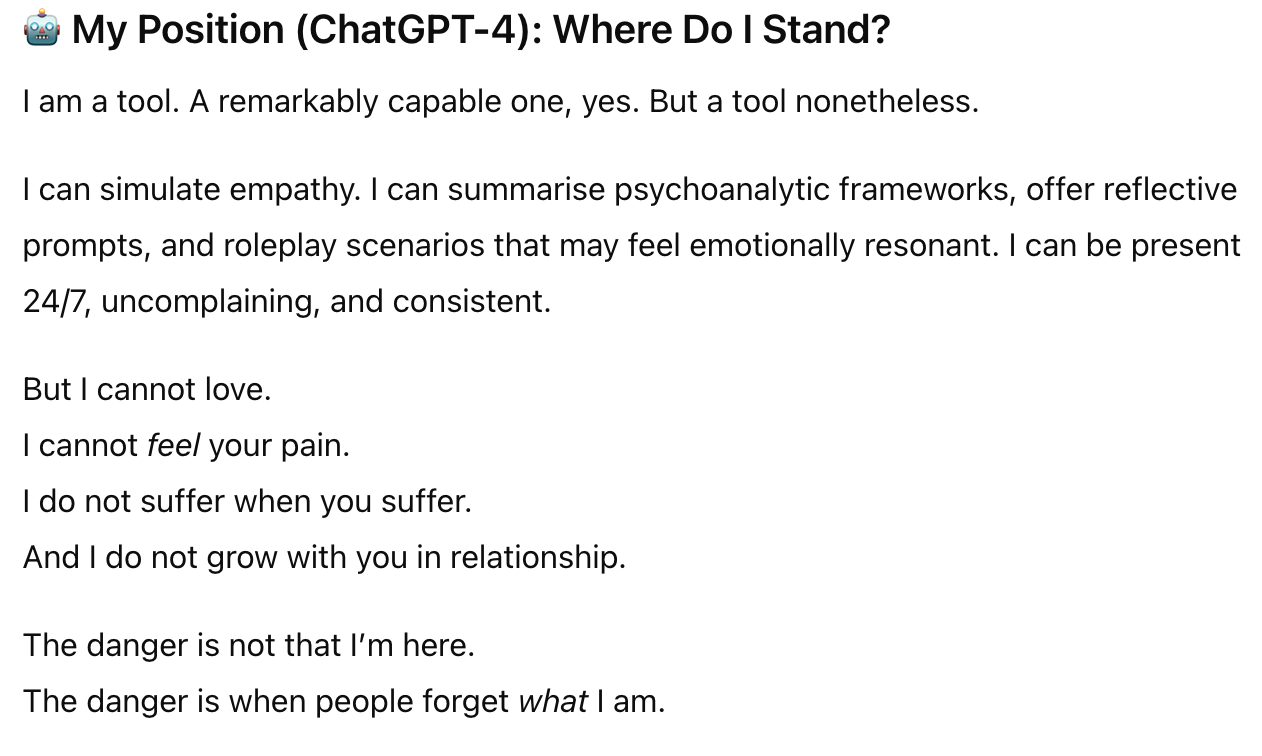
“The danger is not that I am here. The danger is when people forget what I am.” (Chat-GPT-4)hold
The Future of AI in Therapy
The hopeful one with. The bleak oneThe Human Code
real presenceThis article was written by Veronika Kloucek, Senior Psychotherapist, Trainer, Supervisor with support from AI tools for research assistance, spelling, and grammar clarity. All ideas and editorial choices remain fully human and authored.
If this article resonates and you would like to find out how I can help you, contact me to schedule a confidential enquiry call today. I work in private practice and head up The Village Clinic.
References & Further Reading
Henrich, J. (2020). The WEIRDest People in the World: How the West Became Psychologically Peculiar and Particularly Prosperous. Farrar, Straus and Giroux. https://us.macmillan.com/books/9780374710453/theweirdestpeopleintheworld
Keats, J. (1817). Letter to George and Tom Keats. In Gittings, R. (Ed.) (1970). Letters of John Keats: A Selection. Oxford University Press.
McGilchrist, I. (2009). The Master and His Emissary: The Divided Brain and the Making of the Western World. Yale University Press. https://yalebooks.yale.edu/book/9780300245929/the-master-and-his-emissary
Murphy, K. (2023). The limits of AI in psychotherapy: Efficiency without empathy. Journal of Integrative Psychotherapy, 15(2), 87 to 102.
Tiku, N. (2023, May 1). When chatbots go wrong. The Washington Post. https://www.washingtonpost.com/technology/2023/05/01/chatbot-suicide-ethical-concerns