Tag: burnout

  • Between Cultures: Notes on Belonging, Love and Learning to Speak Yourself

    Between Cultures: Notes on Belonging, Love and Learning to Speak Yourself

    I’m an immigrant. I’ve lived in the UK nearly twenty years.

    I still notice small things. The way people ask, “You alright?” and expect a breezy, “Yeah, you?” rather than a moment of real connection. The comfort of tea offered at the worst moments. The long vowels that slip back into my voice when I’m tired, the slight pause when someone asks me to repeat my surname. Some days I feel at home in two places. Some days I feel I’m visiting both.

    Cross-cultural life isn’t a single story. Some of us moved for work or study, some for love, some because a parent packed a suitcase and said it would be better this way. Some found the marriage didn’t hold. Some are raising children who look like both grandmothers and neither at once. Many of us live in a language that isn’t our first. We hold rituals that have no day off here. We learn to cook the foods that smell of home and then apologise for the smell in rented kitchens.

    What binds these lives isn’t a headline. It’s the steady work of marrying up different maps of meaning. How family should function. What respect looks like. Who gets to speak first at dinner. How to disagree without losing face. Whether love equals duty, or choice, or both.

    The ordinary places where culture meets you

    Culture doesn’t only arrive through big events. It shows up in the queue at Boots, when you say “sorry” for being bumped. It shows up in HR forms that don’t fit your name. It shows up when your child asks which holidays you celebrate and why their classmates don’t. It shows up in your partner’s family kitchen when the rules for praise, help, and privacy aren’t spoken but very much enforced. And while I don’t carry the added weight of microaggressions tied to skin colour, for many the complexity of cross-cultural life is compounded by racism.

    It’s in the wedding you attend where your side expects elders to speak, and your partner’s side expects brevity and wine. In the WhatsApp group that runs on your mother tongue and the work meeting that runs on jargon. In the pull to send money home and the push to keep savings here. In the moment you laugh too loudly at a joke to prove you belong, then go quiet because you don’t. 

    The loyalties that split and braid

    Many clients describe a double wish. To stay loyal to the people and values that raised them. To live freely in the life they’ve built now. That wish doesn’t cancel itself out. It makes a braid. Some strands sit easily. Some pull.

    “I’m raising my children here in London,” Sita (not her real name), mother of Indian heritage, told me. “Part of me wants to pass on everything I grew up with, our food, our language, our respect for elders. But then I see how easily my kids question me, how quickly they push back. Sometimes it makes me doubt myself, as if tradition makes me not just old-fashioned but wrong. How do you know which voice to trust: mine, or the one they’re learning here.”

    There can be guilt. For wanting something your parents didn’t have. For not passing on a language. For choosing a partner your family struggles to recognise as “one of us”. There can be pride too. In being able to translate two worlds. In knowing when to be direct and when to be delicate. In teaching children that their identity is bigger than a form.

    The body keeps score of belonging

     This is not just an idea. The nervous system tracks safety, inclusion, exclusion long before we have words for it. If you spend long periods code-switching, smoothing edges, smiling through confusion, your body logs it as work. You might notice tension at family gatherings, a rise in heart rate before you speak up at work, a flatness when you leave a phone call with home and realise you are running out of shared references. None of this means you are failing at culture. It means you are human.

    Love across maps

    Many couples only discover cultural differences when life asks for a decision. Where to live. How to handle money. How to raise children. Whether elders have a bedroom in your home. How often you see family. Who makes the plan and who defers. The early glow of falling in love lets us imagine we mean the same things by “respect” or “support.” Later, the details matter.

    I’ve sat with pairs who love one another and still end up in loops. One partner calls frequent check-ins “care,” the other hears “control.” One believes family decisions must be collective, the other believes partnership is two people in a room. Neither is wrong. Both are simply shaped.

    As a Nigerian client once said to me: “I married an Englishwoman who says she loves how close I am with my family. But when my cousins arrive and stay three weeks, she looks at me like I’ve broken a rule no one told me about.”

    What helps is naming the maps. Not to win, but to see. “In my family, advice is love.” “In mine, advice is criticism.” “In my home, guests drop in.” “In mine, you ask first.” Once spoken, differences stop being personal flaws. They become logistics two people can work with.

    The second generation question

    If you grew up with parents who carried a whole country in their pockets, you may have learned to be grateful, to minimise struggle because someone else had it worse. Clients often ask a quiet question: am I allowed to find this hard when my parents faced far more?

    The answer is yes. Hard is not a competition. Your parents’ resilience doesn’t cancel your feelings. They can be heroes and you can still feel lost. You can honour their story and write your own.

    Naming losses without apology

    Leaving a place, even for good reasons, comes with grief. Not only for people or landscapes, but for ways of being that don’t translate. The pleasure of speaking without thinking about grammar. The humour that relies on references no one here shares. The easy, cheap hairdresser who knew your style. The music that swings you in a particular rhythm. The season that smells of a distinctive fruit.

    You don’t have to justify that grief. You don’t have to earn the right to miss what made you. Naming loss is not betrayal. It is part of integration.

    Anyone who has tried to feel in a language learned later knows the strange distance it brings, how words can clarify and thin emotion at the same time.

    A closing thought

    Most of us who cross cultures learn to carry a small museum inside. Objects, tastes, stories, rules. If you’re reading this and feeling the tug of not quite belonging anywhere, of being caught between cultures, languages, or expectations, know this: you’re not alone. Your confusion is valid. Your longing is human. And your ability to live fully between worlds has not expired.

    The task isn’t to pack the museum away. It’s to curate it. To let it breathe in the home you have now. To invite people you love to visit. To take them by the hand and say: this piece shaped me, that one too, and here is the room I’m still arranging. If you recognise yourself in this, you’re not alone. There is nothing wrong with wanting roots and room in the same breath. That’s not a contradiction. That’s a life.

    This article was written by Veronika Kloucek, Senior Psychotherapist, Trainer, Supervisor with support from AI tools for spelling and grammar clarity. All ideas and editorial choices remain fully human and authored.

    If this article resonates and you would like to find out how I can help you, contact me to schedule a confidential enquiry call today. I work in private practice and head up The Village Clinic. 


    References & Further Reading

    Berry, J. W. (1997). Immigration, acculturation, and adaptation. Applied Psychology: An International Review, 46(1), 5 to 34.

    Bhabha, H. K. (1994/2004). The location of culture. Routledge.

    Dewaele, J.-M. (2010). Emotions in multiple languages. Palgrave Macmillan.

    Hoffman, E. (1990). Lost in translation: A life in a new language. Penguin.

    Iyer, P. (2000). The global soul: Jet lag, shopping malls, and the search for home. Knopf.

    Lahiri, J. (2016). In other words (A. Goldstein, Trans.). Vintage. (Original work published 2015 in Italian)

    Pavlenko, A. (2005). Emotions and multilingualism. Cambridge University Press.

    Porges, S. W. (2011). The polyvagal theory: Neurophysiological foundations of emotions, attachment, communication, self-regulation. W. W. Norton.

  • Still Functioning, Totally Fried: The Slow Burn of Burnout

    Still Functioning, Totally Fried: The Slow Burn of Burnout

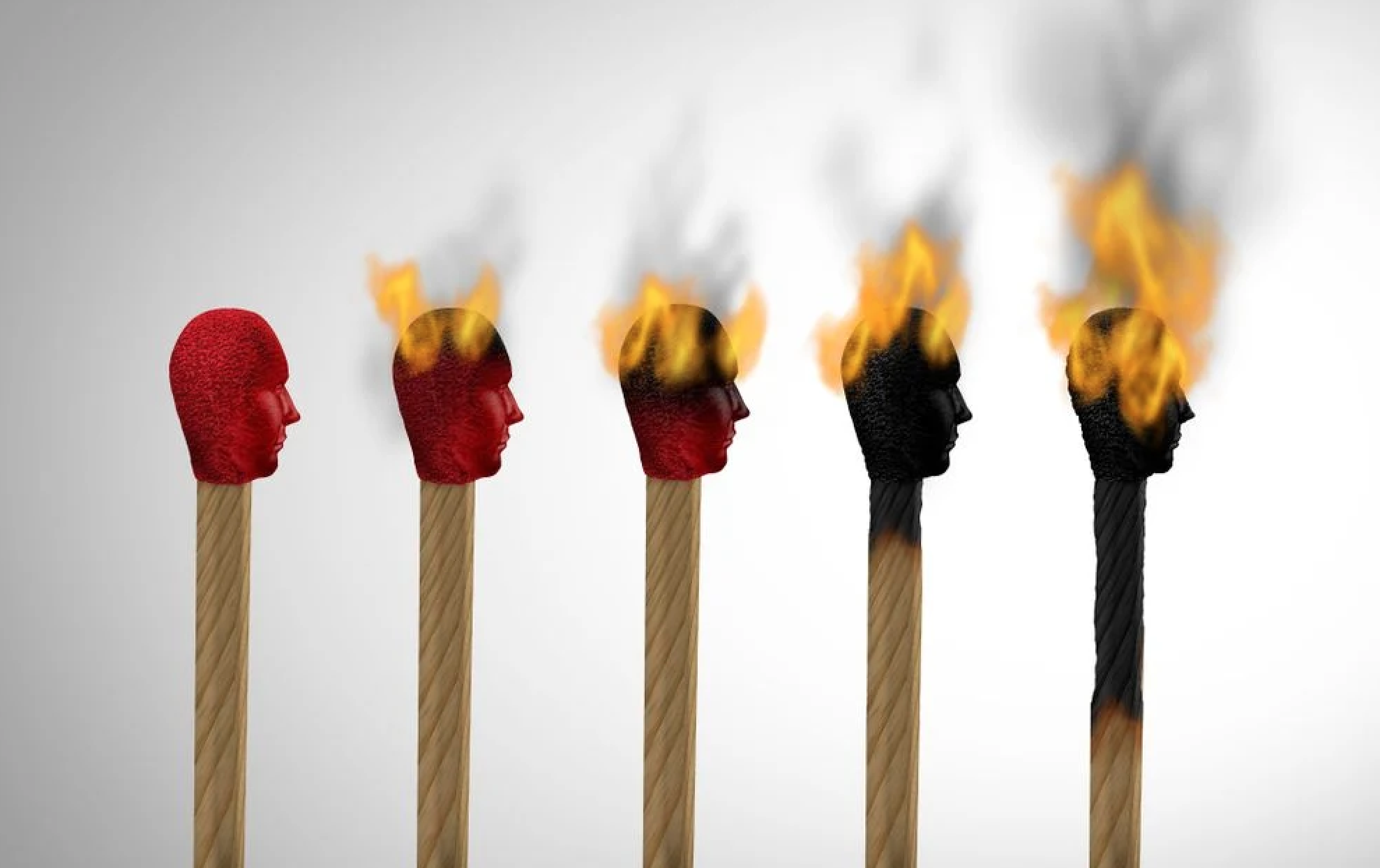
    You might recognise it. You keep going, keep doing, but something inside feels frayed. You’re not sleepy. You’re lost. You’ve tried to rest, but the rest doesn’t rest you.

    This is often the point where people land in my therapy room – burnt out, not just by work, but by long-standing pressure, perfectionism, invisible emotional labour. Burnout doesn’t always scream. It whispers: You’re not yourself anymore.

    When Rest Isn’t Enough

    Burnout is often mistaken for stress. But unlike stress, it doesn’t resolve with a weekend off or more sleep. It’s deeper. More existential. It affects your ability to feel joy, make decisions, or stay connected to what matters.

    According to the World Health Organization, burnout is a state of emotional, physical, and mental exhaustion resulting from prolonged stress, particularly in work or caregiving roles. But clinically, I see it in people across all contexts: parents, professionals, perfectionists, healers.

    Burnout hides in silence, until your mind keeps going, but your heart quietly leaves the room.

    Burnout Is a Disconnect, Not a Weakness

    Burnout often shows up as:

    • A sense of numbness or detachment
    • A creeping cynicism or self-blame
    • Emotional sensitivity, or total emotional shutdown
    • The quiet panic of being ‘on’ all the time, even while you rest

    These aren’t failures of character. They’re signals – indicators of a profound disconnect between your inner needs and outer demands.

    Why Digital Tools Only Go So Far

    Apps can remind you to breathe. Self-help books can inspire reflection. But when burnout is rooted in relational history, shame, identity, or chronic invisibility, these tools often hit a wall.

    Q: Why choose human-to-human therapy over AI or digital tools?
    A: AI and digital support can be helpful in a coaching-like way, but many clients find that deeper issues require a real relationship to be fully understood and worked through.

    The Power of Being Seen

    I work with many people who’ve tried everything before arriving in therapy, sleep trackers, coaching apps, nutrition plans. What made the difference wasn’t a new tool. It was the experience of being seen. Not scanned, not fixed, just met.

    Human-to-human therapy offers what burnout erodes: safety, empathy, reflection, relationship. It allows us to turn toward what’s underneath: unmet needs, self-neglect, perfectionism, inherited pressure.

    Therapy doesn’t fix you. It lets you rest long enough to hear what your burnout has been trying to say all along.

    How to Begin Again

    Burnout recovery isn’t instant. It’s slow, relational, and layered. But it is possible. You might begin by:

    • Naming what you’ve been pushing through
    • Noticing when you feel most emotionally absent
    • Allowing yourself to reach out before it gets worse
    • Exploring, in therapy, what parts of you have been quietly carrying too much for too long

    You don’t have to do this alone.

    And if You’re Still Not Sure

    If you’re reading this and feeling the quiet sting of disconnection – the doubt, the ache, the wondering if it’s even possible to feel like yourself again – know this: you’re not alone. That hollow space inside you isn’t a failure. It’s a sign of how much you’ve been carrying. 

    Therapy can be one place to begin again. A relationship where you don’t have to perform, explain, or hold it all together. Just space to be – tired, uncertain, human. And from that space, gently, something begins to shift. Something starts to feel possible again.


    This article was written by Veronika Kloucek, Senior Psychotherapist, Trainer, Supervisor  with support from AI tools for spelling and grammar clarity. All ideas and editorial choices remain fully human and authored. If this article resonates and you would like to find out how I can help you, contact me to schedule a confidential enquiry call today. I work in private practice and head up The Village Clinic.


    References & Further Reading

    World Health Organization (2019). Burn-out an “occupational phenomenon”: International Classification of Diseases.
    https://www.who.int/mental_health/evidence/burn-out/en/

    Maslach, C., & Leiter, M. P. (2016). Understanding the burnout experience: Recent research and its implications for psychiatry. World Psychiatry, 15(2), 103 to 111.
    https://doi.org/10.1002/wps.20311

    Pines, A., & Aronson, E. (1998). Career Burnout: Causes and Cures. Free Press.

    Van der Kolk, B. (2014). The Body Keeps the Score: Brain, Mind, and Body in the Healing of Trauma. Penguin Books.

    Schore, A. N. (2003). Affect Dysregulation and Disorders of the Self. W. W. Norton & Company.

    Neff, K. (2011). Self-Compassion: The Proven Power of Being Kind to Yourself. William Morrow.

    Goleman, D. (1996). Emotional Intelligence: Why It Can Matter More Than IQ. Bantam Books.

    Herman, J. L. (1992). Trauma and Recovery: The Aftermath of Violence, from Domestic Abuse to Political Terror. Basic Books.

    British Association for Counselling and Psychotherapy (BACP). Understanding burnout and mental health.
    https://www.bacp.co.uk

    National Institute for Health and Care Excellence (NICE). Guidance on common mental health problems and talking therapies.
    https://www.nice.org.uk

  • Is Stress Good or Bad?

    Is Stress Good or Bad?

    Often framed as a foe, stress has become synonymous with anxiety and ill health. Yet, stress is a natural response intricately woven into our biology. When faced with challenges, our bodies engage the fight-or-flight response, flooding us with adrenaline and sharpening our focus. This acute stress can spur us into action, enhancing performance in critical moments. 

    However, the dichotomy between beneficial and harmful stress is crucial. Chronic stress, stemming from relentless daily pressures, can wreak havoc on our well-being. When the stress response lingers without reprieve, it can lead to debilitating fatigue, anxiety, and even chronic health issues, such as cardiovascular disease and weakened immunity.

    So, what is good stress that drives peak performance?

    Understanding the hypothalamic-pituitary-adrenal (HPA) Axis, which lies at the heart of our stress response, is critical. Part of the endocrine system it connects the hypothalamus, pituitary gland, and adrenal glands, orchestrating the release of stress hormones like cortisol.

    Understanding the HPA Axis

    When the brain perceives a threat or stressor (physical, psychological, or environmental), the hypothalamus is activated and releases corticotrophin-releasing hormone (CRH) and, in some cases, arginine vasopressin (AVP). These hormones travel through the bloodstream to the pituitary gland which, in turn, releases adrenocorticotropic hormone (ACTH). This hormone travels via the bloodstream to the adrenal cortex (part of the adrenal glands), stimulating the release of glucocorticoids, primarily cortisol, which is the body’s primary stress hormone.

    In short, in acute stress, cortisol helps mobilise energy by regulating the metabolism mobilising glucose, fats, and amino acids. It has also anti-inflammatory effects, suppressing immune system activity when needed. Once the stressor is resolved, cortisol signals the hypothalamus and pituitary gland to down regulate CRH and ACTH production, effectively reducing cortisol release to restore balance.

    Being in the zone

    You are at your best in a state of flow when you are functioning at your highest capacity, both mentally and physically. In this state, tasks are often performed with efficiency, focus, and optimal use of skills, energy, and attention. Achieving peak performance means that mental focus, emotional regulation, and physical readiness are optimised. Characteristics include:

    • Physical Readiness: This involves the body being in optimal condition to handle the demands placed on it, whether through fitness, endurance, strength, or flexibility.
    • Mental Focus: A high degree of concentration, often leading to what athletes call “the zone,” where distractions fade and the individual is entirely absorbed in the task at hand.
    • Emotional Regulation: Managing emotions, such as stress or anxiety, in a way that supports focus and performance rather than hinders it.
    • Recovery: Peak performance is supported by proper rest and recovery, as sustained high performance cannot occur without periods of renewal.

    When does stress become bad?

    While the HPA axis is crucial for short-term adaptation to stress, chronic stress can lead to dysregulation of this system. Dysregulation is marked by elevated cortisol over prolonged periods which can lead to a variety of physical and mental health issues, including:

    • Immune system suppression
    • Increased risk of cardiovascular disease
    • Mood disorders, such as anxiety and depression
    • Cognitive decline, due to cortisol’s negative impact on the hippocampus, a region involved in learning and memory.

    Finding Balance

    The challenge lies in recognising the nuances of stress. While manageable stress can act as a springboard for personal growth and achievement, it is imperative to develop strategies that foster relaxation and resilience. Mindfulness, exercise, and social support can mitigate the adverse effects of chronic stress, helping us regain control over our lives.

    Ultimately, understanding stress as a double-edged sword allows us to harness its potential while safeguarding our mental and physical health. By cultivating a balanced perspective, we can navigate life’s complexities with greater ease and emerge stronger from the trials we face.

    So, is stress good or bad then? 

    In essence, stress is neither inherently good nor bad; it is our response to it that shapes our experience. Embracing its challenges while actively seeking out practices to soothe and replenish ourselves can lead to a healthier, more fulfilling life. In this way, we transform stress from an adversary into a catalyst for growth, resilience, and ultimately, well-being.


    If this article resonates with you and you would like to find out more for yourself or your organisation about how we can help you become a great communicator, schedule a confidential enquiry call today! Veronika Kloucek, Senior Psychotherapist, Trainer, Coach  


    References:

    Heim, C., & Binder, E. B. (2012). Current research trends in early life stress and depression: Review of human studies on sensitive periods, gene-environment interactions, and epigenetics. Experimental Neurology, 233(1), 102-111.

    Herman, J. P., & Cullinan, W. E. (1997). Neurocircuitry of stress: Central control of the hypothalamo-pituitary-adrenocortical axis. Trends in Neurosciences, 20(2), 78-84. 

    McEwen, B. S. (2007). Physiology and neurobiology of stress and adaptation: Central role of the brain. Physiological Reviews, 87(3), 873-904. 

    McMorris, T., & Hale, B. J. (2012). Is there an acute exercise-induced physiological/biochemical threshold which triggers increased speed of cognitive functioning? A meta-analytic investigation. Journal of Sport and Health Science, 1(1), 11-20. 

    Sapolsky, R. M. (2000). Glucocorticoids and hippocampal atrophy in neuropsychiatric disorders. Archives of General Psychiatry, 57(10), 925-935.